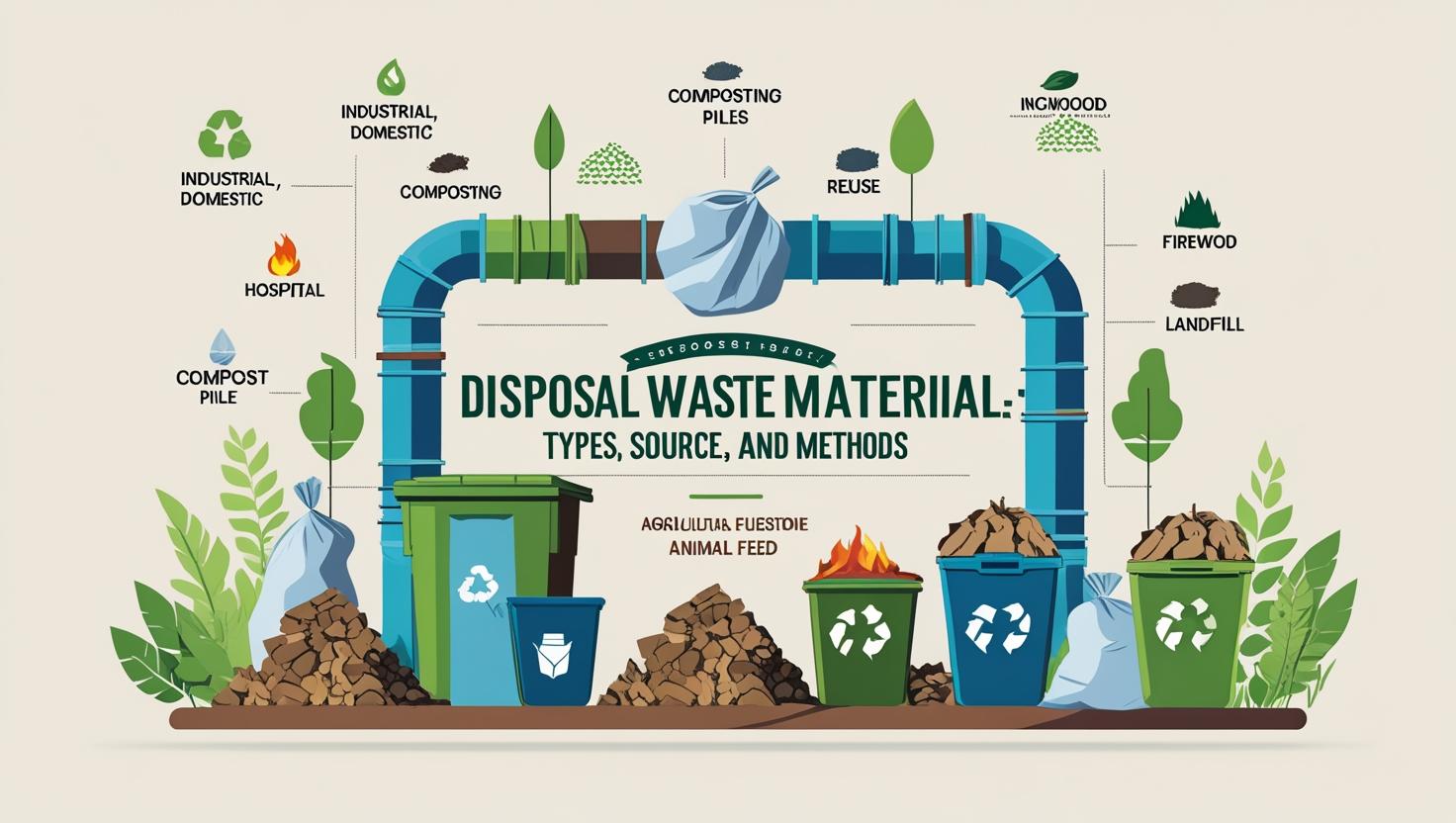
Disposal of Waste Material
Proper disposal of waste material is crucial for maintaining environmental safety and sustainability. Waste, by definition, refers to unwanted or unusable materials discarded after use. It can be worthless, defective, or simply no longer needed. Effective waste management ensures not only environmental protection but also the efficient use of resources.
In this article, we will explore types of waste, sources of waste, workshop-specific waste, and methods of safe disposal.
What is Waste?
Waste is any substance discarded after its primary use, whether in industries, agriculture, or households. Improper disposal of waste can lead to land degradation, environmental pollution, and health hazards. Therefore, understanding waste and its proper management is essential for students, industrial workers, and community members alike.
Key Points:
- Waste is generated in all sectors, including industrial, domestic, and agricultural.
- Open disposal of waste reduces usable land and pollutes air, soil, and water.
Types of Waste Material
Waste can broadly be classified into two main categories: Rural Waste and Urban Waste.
1. Rural Waste
- Originates mainly from agriculture and dairy farms.
- Common forms include crop residues, animal dung, and organic matter.
- Can be reused effectively:
- Burning agricultural waste for energy.
- Composting to produce organic fertilizer.
- Bio-gas plants for fuel production.
2. Urban Waste
Urban waste is generated in households and industries within municipal areas. It can be divided into solid and liquid waste:
a) Solid Waste
- Hard materials such as newspapers, metal cans, bottles, broken glass, plastics, and polythene bags.
- Industrial solid waste may include metal scraps, broken tools, or packaging material.
b) Liquid Waste
- Water-based waste from domestic, industrial, or municipal sources.
- Includes sewage, chemical effluents, and wastewater from cleaning processes.
Sources of Waste Material
Understanding the source of waste helps in planning its proper disposal. Common sources include:
- Industrial Waste
- Generated from manufacturing and processing activities.
- Can be solid, liquid, or chemical waste.
- Often hazardous and requires careful handling.
- Domestic Waste
- Includes rubbish, garbage, dust, sewage, and kitchen waste.
- Comprises both combustible and non-combustible materials.
- Agricultural Waste
- Generated from crops, cattle, and farming activities.
- Must be managed properly to prevent health hazards for humans and animals.
- Fly Ash from Power Plants
- By-product from thermal power plants.
- Requires specialized disposal methods to prevent environmental contamination.
- Hospital Waste
- Highly hazardous, containing microorganisms that may cause infectious diseases.
- Requires strict adherence to biomedical waste disposal protocols.
Waste Materials Commonly Found in Workshops
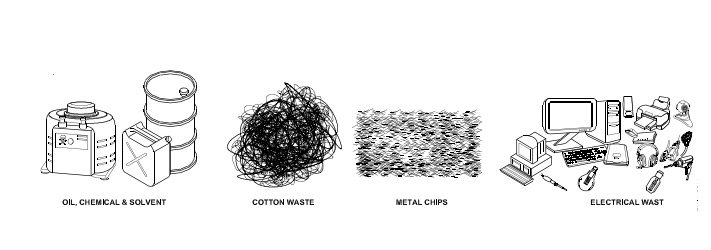
Workshops generate specific types of waste that must be handled safely:
- Oily Waste: Lubricating oils, coolants, and hydraulic fluids.
- Cotton Waste: Used cleaning cloths and rags.
- Metal Chips: From machining, cutting, or drilling operations.
- Electrical Waste: Damaged wires, cables, switches, and accessories.
Proper segregation of workshop waste ensures safety and facilitates recycling or disposal.
Methods of Disposal of Waste Material
Waste disposal is the final stage in waste management, ensuring materials are treated safely. Common methods include:
1. Recycling
- Reprocessing waste materials into new products.
- Benefits: Saves energy, reduces pollution, and conserves resources.
- Common recyclable materials: metals, plastics, paper, and glass.
2. Composting
- A natural process converting organic waste into nutrient-rich manure.
- Safe, non-toxic, and environmentally friendly.
3. Landfill
- Waste is spread in low-lying areas and covered with soil in layers.
- Reduces immediate exposure but makes land unfit for construction.
- Suitable for non-recyclable and non-hazardous waste.
4. Incineration
- Controlled burning of waste reduces volume by up to 90%.
- Generates ash, heat, and in some cases electricity.
- Requires proper treatment of emitted gases to avoid pollution.
5. Waste Compaction
- Compressing materials like cans and plastics into blocks for easier transport.
- Reduces storage space but may require specialized equipment.
6. Reuse
- Many items can be cleaned and reused before disposal.
- Examples: plastic containers as storage boxes, old furniture as firewood.
7. Animal Feed
- Vegetable peels, food scraps, and leftover grains can feed small animals.
- Large bones can be used as dog food.
8. Firewood
- Wooden waste from furniture or carpentry can be used as fuel.
Importance of Proper Waste Disposal
- Environmental Protection: Prevents soil, air, and water pollution.
- Resource Conservation: Recycling and reuse save raw materials and energy.
- Health Safety: Reduces the risk of diseases caused by open waste disposal.
- Sustainable Development: Proper disposal methods support long-term urban and rural planning.
Workshop Safety Tips for Waste Handling
- Always segregate hazardous and non-hazardous waste.
- Use personal protective equipment (PPE) like gloves and masks.
- Store waste in designated containers before disposal.
- Avoid burning or dumping industrial waste openly.
Conclusion
Effective disposal of waste material is essential for health, safety, and environmental sustainability. By understanding the types of waste, sources, and methods of disposal, industries, workshops, and households can significantly reduce their environmental impact. Adopting techniques like recycling, composting, incineration, and reuse ensures the safe handling of materials, promotes resource efficiency, and creates a cleaner, safer community.
Waste management is not only a responsibility but also a key practice in building sustainable living and industrial operations.
